Showing posts with label botswana. Show all posts

Saturday, June 28, 2008

Debut of My Column in Mmegi


This past Friday, June 27, Mmegi published the first of a series of columns I will be writing about issues of race and culture from an African American point of view. To read it from their website you can click here. This picture accompanied it in the paper. Here it is in full text below:

The Politics of Blackness

By Yamiche Alcindor

Henry Louis Gates once wrote, "My grandfather was colored, my father was Negro, and I am black." If I could communicate with the young Gates, I would ask him to add, "My children will be African American, but as for my grandchildren's race . . . well, that will depend on where they live."

Have you realized that getting on a plane might change your race? Until January of this year when I made the 18 hour trek from the United States to Botswana, I didn't. When I got on the plane in the US, I was black. Short of a few confused looks and questions regarding how black I was, my racial identity was something that had been unquestioned. Then, I got off the plane in Botswana and was deemed colored because of the lightness of my skin.

But, what shocked me even more than my "new" race was the relationship between being colored and being black in Southern Africa. In one incident, to my horror, I was invited to hang out at the "colored" side of a party. Confused, I looked at a group of people who would be considered black in the US demean another group of people based on the literal color of their skin tone. In another incident, I was told that saying I was black when in fact I could pass for colored was ridiculous because being colored somehow upped my status in Southern Africa.

To put this into context I must note that "colored" was a term thrown out in the 1960s in the US as blacks protested discrimination and terms seen as demeaning. Colored, to me and most Americans, refers back to a time when the US was starkly separated along racial lines. Put bluntly, the word colored brings to my mind signs reading "WHITE ONLY," which once hung from hotels, restaurants, cafes, water fountains, and other public places. The term brings images of dogs biting peaceful black protesters in the 1960s. And, most importantly, colored for me refers back the American version of apartheid, segregation and Jim Crow laws.

The issue of racial identity recently made headlines all over the world. Last Thursday, June 19th, South Africa's high court ruled that South African Chinese are now legally black. If this confuses you like it did me, I will put it simply: In SA, the Chinese are really black people. The court made the decision to allow South African Chinese who also suffered under apartheid laws to be included in the South African government's Black Economic Empowerment (BEE) an initiative aimed at reversing damages done under apartheid. My question: why change the race of a whole people rather than amend the wording of the initiative to include South African Chinese?

As I think of the term colored and issues of racial identity, I can't help but think of the ongoing issues of race in the US which stem from my country being built on the peculiar institution of slavery and grown on a system whose architects were middle aged white male slave owners. It's the reason why in 2008, as Barack Obama aims to be the US' first African American president (though he would be considered colored here because of his white mother), racist badges reading "If Obama is President…will we still call it The White House?" can still be sold in Texas. (Click here for more on racists against Obama)

However, while issues of complexion still somewhat plague African Americans in the US, it was here that I really began to dissect how even in our common "brownness," people pick each other out and attempt to separate the inferior from the superior using methods which judge people based on how close he or she comes to looking white. I asked myself one question a lot over the last six months that I have been living in Gabs: how is it that years later, after the colonization of a continent, the massive selling of black bodies, and the carnage done to black societies, can we as blacks still not find beauty and pride in our naturally dark hues?

In looking at racial identity many questions exist. What makes someone black? Is it the color of their skin, the tone of their voice, the place where they live, or the people with whom they relate? Scholars from all over the world are still grappling with this subject. As a scholar of African American history, I still grapple with these issues both academically and politically.

Most scholars agree that race depends more on an individual's identity and the society in which he or she lives in than on the actual color of his or her skin. In short: Someone "black" can have the same color skin as a tan "white" person without being considered white. However, after travelling thousands of kilometers away from my home, I have a new theory: race depends on where you are, what you identify with, and what the courts of a country legally decide.

Wednesday, June 25, 2008

Heroes in Seemingly Ordinary Bodies


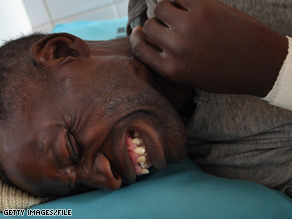
Images from Zimbabwe violence

Today I came face to face with what I have been talking about and studying about for the past year. As I said earlier, I am teaching HIV/AIDS and STI awareness at a high school here in Gaborone Botswana. In part of my lesson I teach about the emotion consequences of sex and the risks one takes in this day in age when living a sexual lifestyle that involves many partners. I start off by asking the class of 16, 17 and 18 year olds what they would be thinking about if they were told they were HIV positive tomorrow.

The question is one that I have wrestled with myself as I have delved deeper into the human aspect of the disease in my travels. After asking the question, the usually rowdy class goes quiet and begins to think about the question in detail. Most often I get students who say they would commit suicide, feel shame, cry, and hide their status from their family and friends. I also get students who say they would accept the disease and continue forward with their lives as ARVs, when taken properly, can allow a person to live their out their natural life.

But today was different. Today we (I teach with three other students) got a question we couldn't really answer. A student asked if there exists a minimum age that a person can begin taking ARVs. As teachers we stumbled for an answer as our research on the disease did not provide us with an answer.

And then it happened. A girl rose her hand and quietly said this: "There is no age minimum for ARVs because I have been taking them since I was five." My heart dropped. She was so young, so beautiful and living with a disease that seems like such a far away problem for some.

As the class struggled to move on I couldn't help but realize how brave this little girl had been. She looked like a typical high school student but instead she was this brave young woman whose small voice told a story of courage, persistence, and drive for life.
And then it hit me, how brave am I? How brave have I had to be and would I ever be able to tell a whole class of my peers that I was infected with a disease that carries the stigma that HIV carries? She may not have realized it but this girl challenged my goal of living a safe life.

Go to school, continue on to law school and ignore the fact that in your heart you want to write about issues others may be too scared to. That was my life plan. But,I love writing and in my heart I know I want to write about issues that effect people
internationally but will I be brave enough to do it? Will I be brave enough to really take a turn of adventure and answer the voice inside me that says "Go." Honestly, I don't know.

But as Zimbabwean opposition candidate Morgan Tsvangirai pulls out of what was supposed to be Friday's election day I can't help but reflect on the bravery of those seemingly ordinary people in the country which say they will vote in spite of the number of rapes, beatings, and murders committed by Robert Mugabe's ZANU PF. They're international heroes and may not even know it. But then again that's why I want to write, to tell the world about these heroes wrapped in seemingly ordinary bodies.
I want to write, period.

Saturday, June 21, 2008

Move In Day (May 1, 2008)

Me and Jones (my housemate)


Well it is official I’m in living in Africa on my own with the locals. Today I moved into my new house away from the University of Botswana. I will be living with three guys from school. Two of them are these poets that formed a group called “The Movement.”
My
favorite is Cydd (real name Kabelo). He’s really cool. He is really nice to me and really acts like he wants me here. The other people are a bit scared of me. I’m the only girl and it just seems like I stick out and they don’t really want me around. But, I’m getting used to the idea that it might be lonely here. I am hoping to make new friends from church, work, and maybe poetry. I doubt it but hey it would be nice.

But on to my motivations for living here and why I really want to try and learn what it means to be in Botswana. I have been here for three months yet I hardly know anything about Botswana. I have never eaten in a village or made a friend who had to eat “free style sandwiches” (what Cydd called funny looking fish, bread, and mayonnaise).
Most of my interactions here were with other American students who taught me a lot about how to deal with people and how to just let people who you don’t get along with be. I really learned a lot about how some people are there for your seasons and that means they will be around for a time and then when its time they will be gone. I learned a lot from the friends I made and lost here and it was good. I think I got a great gift here. Both in my appreciation for Georgetown and the people that I met there who I have grown to love.
I also learned a lot about myself, both good and bad. I think I can look at myself more objectively and realize that I’m not perfect, not always right, hard to get along with, stubborn, and sometimes very mean. I also know that if someone loves you they love the good and the bad and they don’t try to hurt you or embarrass you when you’re not the positive person they fell in love with.

But, I think I failed where God comes in. I want to hear him more clearly and be with him more closely. I hope move in day is followed my God moved into my heart day. I want to grow and learn and appreciate what God has sent me.

And oh Gaborone, Botswana. I want to see you in your true form. (I don’t want to be robbed, or have anything go missing) but I want to feel like I came here and really tried to be part of the community—and not in condescending stay away from Americans way but a these people are good people I am happy to know way.

And, Eddy. He’s a nice kid and he really means well. But I need to be independent and I need to learn to love me without all the distractions.